
A broker launches a deal. Office building, 82,000 square feet, Class A, strong submarket. The email goes out to 400+ qualified prospects.
You know how this used to work. Prospect opens the email, skims the photos, reads the headline numbers, makes a gut call in ten seconds: click the OM link or move on. One evaluator. One decision. Entirely human.
That workflow is disappearing. And most brokers have no idea what is replacing it.
How AI Agents Are Changing CRE Property Evaluation
A growing number of buyers and investors still open that deal email. They still skim. The gut reaction still happens. But instead of pulling up the OM and running their own analysis, they do something different.
They push it to their AI agent.
“Look at this deal. Pull the financials. Compare it against our acquisition criteria. Summarize what I need to know.”
The agent ingests the OM, cross-references market data, runs the comps, checks the lease roll, and returns a structured summary in minutes. Work that used to take an analyst half a day.
But here’s what didn’t change: the human still made the initial decision to feed it to the agent. That decision was still driven by the same gut reaction, the same split-second visual impression, the same emotional filter that’s been running the process for decades.
The AI agent didn’t replace the human filter. It added a second evaluator behind it.
When AI Screens Your Listing Before the Buyer Does
Now take it one step further. This is where it gets uncomfortable.
Some institutional investors and funds are already building systems where the AI agent screens the deal before the human sees it. The email lands, the agent extracts the data, compares it against investment criteria, and generates a ranked list. The human decision-maker sees a curated feed, not the raw blast.
In that workflow, your prospect’s first interaction with your property isn’t the email. It’s the agent’s summary.
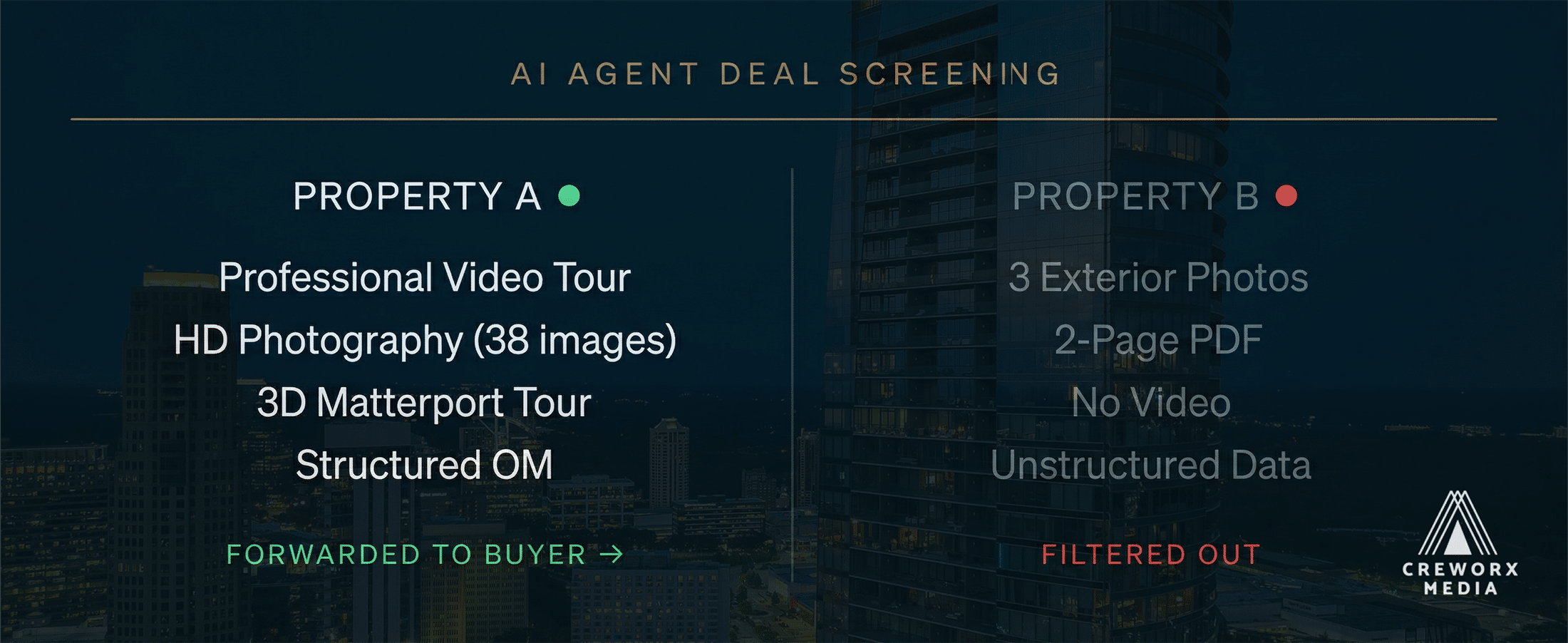
Two identical properties, similar fundamentals, similar location. One has a professional video tour, high-resolution photography, a well-structured OM with detailed floor plans. The other has three exterior photos, a two-page PDF, and a phone number.
The agent doesn’t just compare cap rates. It evaluates the quality and depth of information available. A thin marketing package means less data to work with, less confidence in the analysis, and a lower ranking in the summary.
Your listing got filtered out before a human ever formed an opinion about it.
Why Commercial Real Estate Marketing Now Serves Two Audiences
Your deal package no longer serves one evaluator. It serves two, running in parallel.
The human makes a fast, emotional, visual decision. Does this property feel right? Does the marketing look professional? Is this worth my time? That happens in seconds, driven by visual quality, production value, and first impressions.
The AI agent makes a slower, analytical decision. Does this meet our criteria? How does it compare against alternatives? What’s the risk profile? That’s driven by data density, information quality, and how much signal the marketing package provides.
These two evaluations are converging. The human’s emotional impression and the agent’s analytical summary increasingly arrive at the same moment, reinforcing or contradicting each other.
If the agent says “strong deal” but the human’s first visual impression was a blurry phone walkthrough and a generic flyer, there’s friction. Doubt creeps in.
If the agent says “strong deal” AND the first thing the human sees is a cinematic property tour showing the space, the light, the flow, the neighborhood context, there’s confirmation. Both evaluators agree. That’s how deals move forward.
Why Professional Video Wins Both the Human and the AI Agent
There is exactly one medium that serves both evaluators simultaneously.
Professional video gives the human the emotional hook. It answers the question no spreadsheet, no agent summary, and no PDF can answer: What does it feel like to be in this space?
A 120-second video of someone moving through a building, showing how the lobby flows into the elevator bank, how natural light hits the floor plates, how the loading docks connect to the street grid. That creates an emotional response that drives decisions. It’s the reason a prospect says “I want to see this in person” instead of “send me more data.”
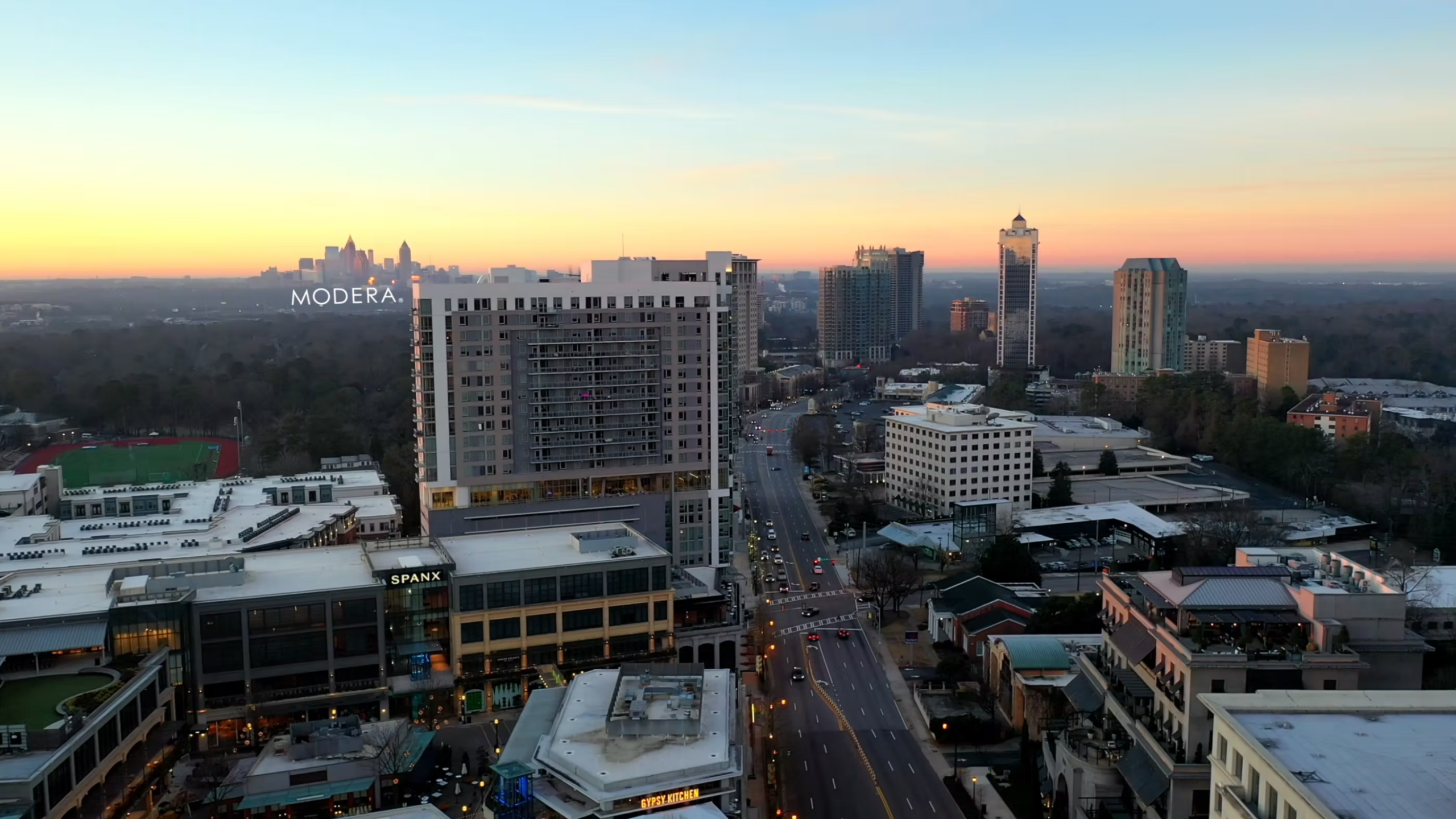
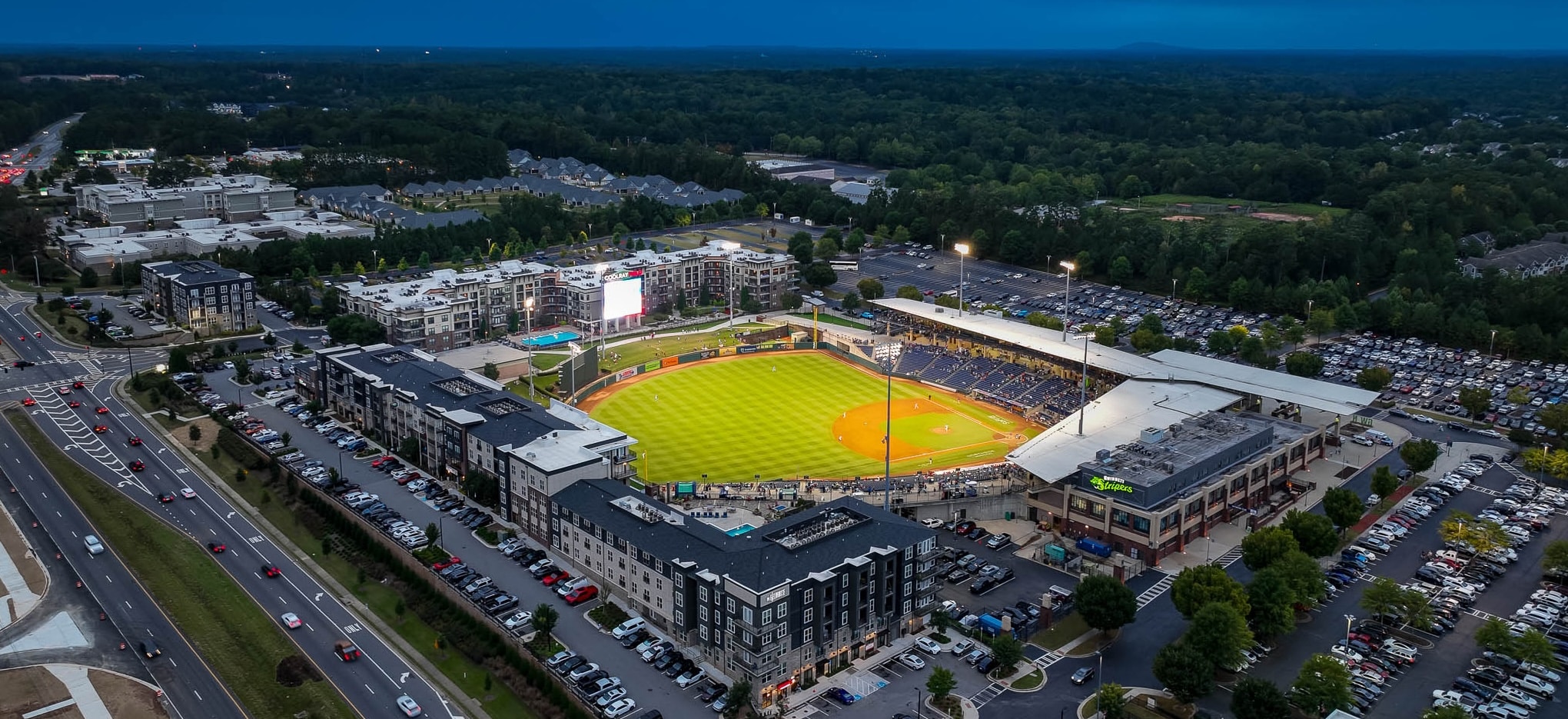
See what this looks like in practice: view a full property media package featuring video, photography, and 3D Matterport tours working together.

The data backs this up. Real estate listings with professional video receive 118% more engagement than those without, yet only 38% of agents currently use video in their marketing (ReSimpli, 2025). The gap between effectiveness and adoption is massive, and in commercial real estate, it’s even wider.
At the same time, that video gives the AI agent dramatically more signal to work with than static images ever could. Property context, neighborhood footage, interior flow, finish quality. The agent gets spatial information and environmental context that three wide-angle photos simply don’t contain. A property with a comprehensive video tour generates a richer, more confident analysis than one with a thin photo set.
Photography partially serves the human but gives the agent almost nothing beyond listing data. Text serves the agent but does nothing for the human’s emotional evaluation. 3D tours serve the analytical side but lack narrative quality.
Video is the only format that earns attention from the human AND earns confidence from the agent.
“But Our Deals Sell on Fundamentals”
“Our deals sell on fundamentals. Cap rate, location, tenant quality, lease terms. If the numbers work, the numbers work.”
You’re right that a video doesn’t change the math. But it changes whether anyone looks at the math.
First impressions color all subsequent evaluation. That’s not a marketing opinion. It’s cognitive science. The halo effect means a strong visual impression makes every number that follows feel more credible, more trustworthy, more worth the time.
And in the agent-augmented workflow, the math is handled by the machine. The agent runs the comps, checks the lease roll, calculates the sensitivity. The human’s role is shifting from “analyze the numbers” to “decide if I trust this enough to act.”
The cost of a professional property video tour is a fraction of what a single month of vacancy costs on a commercial asset. The question isn’t whether you can afford it. It’s whether you can afford the deals you’re losing without it.
If your competitor’s deal package opens with a cinematic property tour and yours opens with a PDF attachment, you’ve lost the trust competition before the agent finishes its analysis.
What a Competitive CRE Deal Package Looks Like in 2026
The bar moved. Here’s where it sits now.
For the human:
- Professional video tour (90-120 seconds, narrative structure, not just a drone flyover)
- High-resolution photography (interior and exterior, professionally lit)
- Clean marketing collateral (not a Word doc converted to PDF)
- A subject line and preview image that earns the open
For the AI agent:
- Data-rich OM with structured information (not buried in paragraph text)
- Comprehensive visual media (gives the agent more context for analysis)
- Detailed floor plans, site plans, and market positioning
- Digital-first delivery (machine-readable formats, not scanned documents)
Most CRE firms are still building deal packages for a single evaluator that’s quickly becoming the minority use case. The firms that figure out dual-audience marketing first will close the deals that everyone else is wondering why they lost.

The 2026 CRE Market Window: Why Now Matters
Return-to-office mandates are driving CRE activity up in 2026. Deal volume is rising. Competition for quality tenants and buyers is intensifying.
At the same time, AI agent adoption among investors and corporate real estate teams is accelerating faster than most brokers realize. The sophisticated buyers, the institutional players, the funds with the biggest checkbooks, are the ones most likely to have agents in their evaluation workflow already.
The firms that treat their property marketing as a dual-audience problem will capture a disproportionate share of the deals coming back to market. The firms that don’t will keep sending the same PDF flyers into an inbox where an agent is now deciding what’s worth a human’s time.
Frequently Asked Questions
How are AI agents changing commercial real estate?
AI agents are automating deal screening, property evaluation, and investment analysis for CRE buyers and investors. Instead of manually reviewing every offering memorandum, buyers feed deals to AI agents that extract financials, run comps, and generate ranked summaries in minutes. This changes what marketing materials need to accomplish because they now serve both a human decision-maker and an AI evaluator.
Why is video important for CRE property marketing?
Video is the only format that simultaneously serves both the human and the AI agent in a property evaluation workflow. It gives humans the emotional experience of a space that photos and PDFs can’t deliver, while providing AI agents with rich spatial and environmental data for deeper analysis. Listings with professional video receive 118% more engagement than those without.
What should a 2026 commercial real estate deal package include?
A competitive 2026 deal package needs to work for two audiences: the human (professional video tour, high-resolution photography, clean collateral) and the AI agent (data-rich OM with structured information, comprehensive visual media, machine-readable formats). Firms still sending PDF flyers with a few exterior photos are increasingly being filtered out before a human decision-maker ever reviews the deal.
What is dual-audience marketing in commercial real estate?
Dual-audience marketing is the practice of building property marketing materials that serve both human evaluators and AI agents simultaneously. As more CRE buyers use AI agents to screen and analyze deals, marketing packages need to win the human’s attention through visual quality and emotional impact while also providing enough data depth and signal for an AI agent’s analytical evaluation.
At CRE Worx Media, we produce commercial real estate video tours designed for this exact shift: content that makes a human want to visit and gives an AI agent the depth to recommend it.
Ready to upgrade your deal package?
→ Request a quote — Fill out our quick form and we’ll scope your project
→ Email us directly — info@creworx.media





Leave A Comment